

Have you ever opened your card statement and wondered where the month went?
You walk into a store for one thing and leave with five. Or you do a double-take at your bank app after a few late-night purchases. Those small charges add up and quietly hurt your savings and goals.
This guide helps you stop overspending and build better money habits without drastic sacrifice. You’ll learn how to spot triggers, track your spending simply, and set limits that actually stick.
First, we’ll diagnose what’s happening. Then you’ll set up a low-effort tracking system and a budget you’ll use. Finally, you’ll lock in small routines that protect savings and move you toward financial goals.
Key Takeaways
- You’ll identify spending triggers and review statements without judgment.
- Simple tracking reveals patterns faster than willpower alone.
- Build a budget that fits your life, not one that feels impossible.
- Use low-effort tactics to protect savings and reach your goals.
- This guide gives a step-by-step plan you can follow month to month.
Why Overspending Is So Common Now (and What It Costs You)
Small, everyday buys can quietly drain your savings before the month ends.
Technology makes purchases possible anytime, which fuels mindless spending. Saved cards, one-click checkouts, and subscription traps mean you rarely feel the friction of buying.
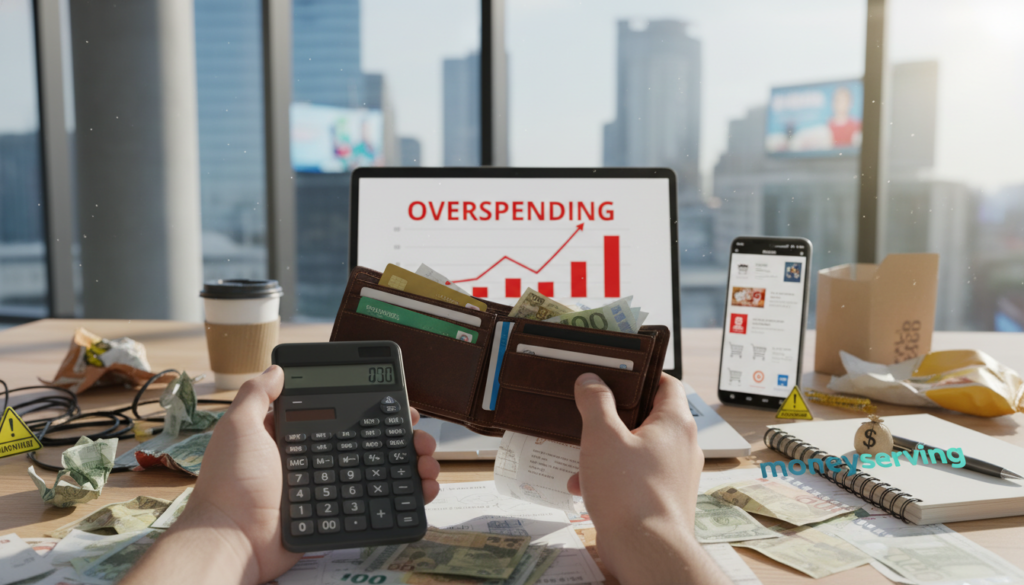
How small impulse purchases add up
The “death by a thousand cuts” is real: coffee runs, app extras, and delivery fees stack over a month.
A 2024 Capital One Bank survey found the average consumer spends $281.75 per month on impulse purchases — about $3,381 a year. That hits savings fast.
The real-world fallout
Money for goals often gets redirected to cover these charges. That can mean less emergency savings, higher credit balances, or extra months paying interest.
If you carry a balance on a credit card, interest lets debt linger longer than you expect. The result: damaged credit and more financial stress for you and your relationships.
Warning signs you can check this week
- Your credit utilization is creeping up.
- You lean on credit for essentials.
- You avoid looking at your account or forget subscriptions.
- You feel frequent buyer’s remorse after spending money.
Once you see the cost, the next step is understanding what triggers your spending habits and fixing them.
What Causes Overspending: Triggers, Lifestyle Creep, and Frictionless Payments
Small purchases often sneak in at odd moments and quietly reshape your monthly cash. Before you act, it helps to see the main reasons you may spend more than planned.
Two buckets of triggers help you spot patterns fast: emotional and environmental.
- Emotional spending: Stress, boredom, and anxiety push you toward quick relief buys, especially late at night. These purchases feel like short-term fixes for feelings.
- Lack of a clear budget: Underestimating variable expenses—groceries, transport, dining—makes leftover money feel like free cash. That makes budgeting fragile.
- Lifestyle inflation: Upgrades that start as treats become regular habits. Premium subscriptions, more takeout, and brand-name swaps quietly raise your baseline costs.
- Frictionless payments: Saved cards and one-click checkout lower the pain of paying. A fast purchase often feels smaller than the real expense.
- Marketing nudges: Social media, targeted ads, and sales emails create urgency and normalize constant shopping.

Quick self-audit: name your top 3 triggers, note the time you spend most, and list categories that tempt you. Once you know the cause, you can build simple tracking to make every purchase visible again.
How to Stop Overspending with a Simple Spend-Tracking System
Start by watching where each dollar goes this month—visibility changes behavior fast.
The goal of tracking is not perfection. It is visibility so you can make better decisions before the next purchase.
Step 1: Do a 30-day audit of your bank and card statements. Highlight regret purchases, impulse buys, and forgotten charges. Review both checking and credit accounts without judgment.
Step 2: Sort expenses into needs vs. wants and fixed vs. variable. This makes priorities clear and shows where flexible categories grow over time.
Step 3: Pick one method you will actually use — a budgeting app, a simple spreadsheet, or your bank’s built-in tools — then track spending in real time for at least one month.
- Daily: 2-minute balance check before you buy.
- Weekly: quick category review to spot trends.
- Set alerts when you cross a spending threshold.
| Action | Tool | Benefit |
|---|---|---|
| 30-day audit | Bank & card statements | Reveal impulse and hidden charges |
| Categorize expenses | Spreadsheet or app | Clarify needs vs. wants |
| Real-time tracking | Banking alerts or budgeting app | Decide before you spend |
Collecting data is neutral work. Awareness helps you stop overspending and shape better spending habits. Tracking shows the “what.” A budget will show the “how much” next.
Stop Overspending with a Budget You’ll Actually Use
Knowing why you want to save turns daily choices into deliberate moves toward that target.
Define 1–3 clear financial goals (emergency fund, down payment, debt payoff). When your goals are specific, saying no to needless purchases feels purposeful. Write the goals where you see them each payday.
Start with your “why” and turn it into clear financial goals
Use the 50/30/20 framework as a baseline: 50% needs, 30% wants, 20% savings or debt. Adjust those slices if rent or caregiving changes your reality. This simple rule keeps budgeting low-friction and honest.
Set limits and give yourself fun money
Set category caps from your tracking data — dining out, clothes, entertainment. Include a weekly or monthly “fun money” allowance so you can enjoy shopping without guilt. When the allowance is gone, pause purchases.
Plan purchases with a list and automate savings
Make a list before grocery or store trips to cut impulse add-ons. Automate transfers on payday so you pay yourself first; mobile banking tools make saving automatic. If you use credit, consider paying cards right after purchases to keep cash flow aligned with your budget.
“A budget that fits your life protects your goals and lets you still enjoy money today.”
Practical Ways to Control Spending Immediately (Even If Willpower Is Low)
When willpower is low, small environmental changes make good choices easier.
Use the 24-hour rule: save the item or screenshot it, then wait a day. Often the urge fades and you decide with clearer priorities. This reduces impulse purchases tied to urgency.
Change how you pay: try two weeks of debit or physical cash so spending feels real. If you keep a credit card, set a rule to pay balances down weekly to protect your credit and avoid high utilization.
Cut exposure to temptation: unsubscribe from promo emails, use ad blockers, and limit social media browsing that leads to window shopping.
Try a short no-buy or low-buy challenge: define allowed items (essentials, bills, planned groceries) and pause nonessential shopping for a week or month. Use rules you’ll keep.
Replace emotional shopping: when you want to spend money for stress or boredom, take a walk, call a friend, journal, or make tea at home. Small swaps meet the same need without the cost.
| Quick Action | Why it works | How to start today |
|---|---|---|
| 24-hour rule | Reduces urgency and regret | Save item, set a reminder for next day |
| Debit or cash | Shows immediate impact on balance | Move essentials to debit for two weeks |
| Inbox & ads cleanup | Removes constant buying cues | Unsubscribe; enable ad blocker |
| No-buy challenge | Creates a short-term win | Pick rules and track days |
“Small changes to your environment create quick wins and make budgeting feel doable.”
For more practical guidance, see this detailed guide on how to stop spending money.
Benefits of Controlling Your Spending (and Common Mistakes to Avoid)
A little control over daily expenses creates big wins for savings and credit over time.
Benefits you’ll notice quickly: more savings each month, less stress when bills arrive, and better credit outcomes when you keep balances low and pay on time. These effects compound: lower debt means fewer interest costs, and improved credit helps you qualify for better rates on a car loan or mortgage.
Common mistakes that slow progress
Relying on a sale or coupon to justify an unplanned purchase is a frequent trap. A discount only saves money if the item was already on your list and in your budget.
Carrying a credit card balance can make small purchases grow into long-term debt. High interest and rising utilization hurt your credit and cost you extra money.
Subscription creep quietly drains funds. Spend ten minutes monthly to audit recurring charges and cancel things you no longer use.
Keep progress going: protect an emergency fund
Build a cushion for real emergencies like a medical bill, urgent car repair, or necessary travel. Aim for 3–6 months of expenses over time. If that feels large, start with $500–$1,000 and grow it steadily.
| Goal | Why it helps | Practical step |
|---|---|---|
| More savings | Creates options and lowers reliance on credit | Automate transfers on payday |
| Better credit | Access to lower interest rates for car or home loans | Keep balances low; pay on time |
| Lower stress | Fewer surprises and less monthly pressure | Set clear category caps and review weekly |
| Emergency fund | Stops short-term debt from becoming long-term debt | Start with a small target; protect it from non-emergencies |
“Protecting your cushion and avoiding impulse deals keeps you moving toward the goals that matter.”
Conclusion
Before you close this page, pick one small habit that will change how you use your money.
Core sequence: identify triggers → track spending → build a realistic budget → set limits and defaults → repeat for one month.
Shifting your mindset matters. Reducing overspending isn’t about never enjoying life. It means choosing purchases that help your goals and create calm.
Start today: pick one way to track transactions, set one category limit, unsubscribe from one promo source, and automate a small savings transfer.
Focus on consistency over intensity. Small changes that form strong financial habits add up each month and make progress feel inevitable.
Quick review cadence: a weekly check-in, a monthly adjustment, and a quarterly goals review. If you slip, reset without judgment and use your tools and tips to get back on track.
Keep this simple plan and your intent in view, and your money will work harder for what matters most. Reduce overspending with steady steps and kind persistence.